Showing posts with label GRENADA. Show all posts

From Grenada to Venezuela to Bonaire

At the notice of Hugo Chavez unfortunate death last night, I got reminded of our impromptu visit to Venezuela a couple months ago. Maybe you'd like to hear the story?

We had spent a month in lovely Grenada, the final stepping stone out of the West Indies, and were eager to get moving Westwards. Bonaire was the first on our radar, and we hoped to make the 400 miles in approximately two and a half days. We decided to leave in the night so we'd get the first twelve hours of darkness quickly over and done with and then only have another night left before arrival. That was the plan at least. But you might know that on the seas one shouldn't attempt on making too many or too firm plans, as they often tend to get turned around. You never really know what mother nature has in store for you before you actually know.

Anyways, for a long dark night ahead of us, Alex prepared the yellow jacklines from the bow to the stern, would we ever need to go up and do something on deck in darkness. 
Raising the sail, off we go from the cruise ships and town of St George's.

Now, I don't have any images at all from the following 24 hours, because as soon as we had raised the sails and got going towards Bonaire, huge squalls came over us. That could have been refreshing in a sense, if it wasn't that they decided to stay with us for the following 24 hours sharp. You can already see them lurking above the mountains in the image above.

There was a predicted 20-25 knots of wind for the first few hours, then it was supposed to drop down to 16-20, but the same goes with this. You can never really rely upon the weather and wind reports, as they always tend to be intensified when you least want them to.

20-25 knots turned quickly into 25-30 and gusting occasionally close to 40. The consistent wind kicked up large waves as it always does and the whole night we rode waves of around 12-14 feet. Wonderful. I doubt anyone of us got any sleep that night, and we were three people onboard for this crossing mind you. 

As the morning arrived, the wind slowed down a little, not too much, but at least we could get a better stability and finally could we, exhausted as we were, get some sleep. One hour here, another hour there. As the morning sun got stronger and our minds got sharper, we realized what we didn't wanted to see.... our mainsail had dramatically ripped during the stormy night. 

With two hundred something miles to go, we agreed on that we had to repair it, as we wouldn't want to risk it ripping apart completely up to the next reef. Our options at this time were A.) Repair it while on the sea, meaning lowering the sail and stitching it while bobbing around in, now, 8 foot seas. An operation that would take at least 2-3 hours and involve at least one of us three throwing up in the process. Or option B.) Stop at the first Venezuelan island that we passed, anchor and stitch that sail in peaceful waters and also get a peaceful nights of rest. Luckily or unluckily who you were to ask in this moment, one island of Venezuela proved to be just a couple hours sail away from where we were in this moment of discovery.
Venezuela has a beautiful and vast coastline on the Caribbean sea with a plethora of islands and bays. We would have loved to visit, weren't it for the violent robberies towards sailors that seem to be so common these days, and Alex and I had specifically said it is the one country on this side of the world we'd keep away from no matter what. Some people go to Venezuela and they never have problems, but we aren't into taking risks like that in areas where statistics makes its own good job in keeping us away.

This is not to say that Caribbean where we just came from is much safer, we have been victims of people stealing from and even inside of our boat on a few occasions, and on many islands there's been armed robberies brutally violating, and sometimes even killed, people like ourselves. 

But Venezuela seemed to top the game of violence and now we were here, planning on stopping for the night. Luckily it was La Blanquilla that was the nearest of our position, the tiny island from which we had never heard any reports of violence. Main concern seemed to rather be on the shoreline of the mainland, as well as the islands of Los Tesigos and Isla de Margarita, some sixty miles away from us.
Getting closer to la Blanquilla, one of the tiny islands around 100 miles from mainland Venezuela.
We arrived and dropped anchor just after sun had disappeared in the horizon. I can't say we were relieved as yet. Michael and I kept ourselves busy with pirate stories all night long till we passed out of exhaustion. 
Morning arrived and it was time to get busy with that sail. Here's Alex inspecting the first of the two large rips.
Such a handy partner I've acquired, he can even stitch the man!
Up with the Q flag as we now were in new territory. One funny side note is that while we were worrying in the darkness of last night if we had anchored too close to a pirate village, we now in the morning got to realize that we had in fact anchored right outside the coats guard as well as a military base. I guess it would be hard to find a safer place to sleep.
French for the captain, Finnish for the first mate and Irish for the second mate Michael. Michael who normally lives in Boston has dual citizenship, American is his second - but we figured in areas like these where USA isn't hugely popular, it would feel better to fly the Irish flag to not stir up some potential annoyance with authorities, or pirates for that matter..
Land looked inviting but even if we felt safe having the coast guard right outside, we were anxious to get moving.
Shoreline of la Blanquilla. Blanquilla means the little white (island). Later on we learnt that the island boasts with some incredible white sandy beaches and extremely clear water great for diving.
Stitching seem to come together nicely. Here's with some sail tape on top to add more strength.
A little hacienda by the beach.
Sail tape on the other side and we're finally ready to go!
Luckily wind had dropped during the night to a pleasant 17 knots or so and sun was shining like never before.
Sporting my new Tommy Hilfiger bikini.
Captain laid down to rest with a good book.
While first mate aka chef decided to make some lunch for her hungry crew.
Panfried chicken legs and roasted potatoes with a blue cheese salad with lettuce, pear and honey.
Day number two from Venezuela and now only 40 miles to go.
Sail still looked good and held together nicely, just the tape started to release.
Peanutbutter cups, anyone?
Always fixing with something.
Night approaching and we could begin to see the large ships passing between Panama and Venezuela.
An easy meal for dinner.
And after the sun had set, we could arrive to safe harbor in a new country and island... I told you, we always manage to arrive at night!

To see how much we loved Bonaire, check out our wonderful stay at a breathtakingly beautiful villa here and here. I still have so many photos to show you from that island by the way. One of these days.. 

Bonaire was definitely one of the highlights of our sailing journey thus far, please make yourself the favor and go there if you ever get the change.

Cultural differences

Our friend is flying home to Boston today so we'll be back to our normal routines again. From today our days will not be filled with as much dining and exploring out, but instead we'll be back to preparing the boat for our Pacific Crossing that is rushing towards us at a fast pace. I will also be back with the computer to catch up with work that's been neglected in the previous weeks of "vacation". As of the strong winds in the bay outside we have decided to stay another week here in the beautiful town of Santa Marta before continuing to Cartagena. 

I know I'm repeating myself, but what a wonderful change to be here in a South American country. The West Indies are great in many ways: the beautiful beaches and lush nature. The scenery, the sailing grounds and the volcanic mountains are equally attractive and especially in hurricane season, you can still find astonishing places where your boat is the only one in the bay which gives a sense of disconnection to all and everything. You can also get a hold on good craftsmen for boat restoration and repair, for that Antigua and Grenada seem to be the best. But no matter how much we tried to see it, the culture and way of living didn't rhyme well with the way we see life should be lived. Here in Colombia people are happy though they don't have much in terms of money or security. They find joy and thankfulness in each other, music and just the fact that they are alive. People work hard for the little money they make and they are, generally, very friendly and hospitable to both natives and visitors alike.

In many parts of the West Indies (of the islands we've visited), many of the people we met seemed unhappy for some reason, or unmotivated is maybe the right word. There are many West Indian people that work hard, but most of the ones that you meet, are either extremely unproductive or have an attitude problem or in many cases, both. Something else that could frustrate us immensely is that people rather spend hours and hours, days after days waiting in the shade for that right tourist to pass by who they can overcharge for an, often, bad service or for not such a valuable product, rather than lowering the price and offering a smile, to be able to sell more. The philosophy on how to make a living and keep your visitors and clients happy seem to be the extreme opposite in the West Indies as opposed to a country like Colombia and many other places on earth.

The native West Indian people are also often racists towards white - some are better in hiding that than others, and inevitably, it creates a tension and feeds the negative energy from both sides and a segregation between locals and visitors is an unfortunate fact. Even many of the expats who've chosen to settle on the islands, has become equally bitter and pessimistic, probably due to how they've been treated, this is especially the case in Antigua (Falmouth Harbour area in particular). Sorry to say, but it's one of the most depressing places we've ever been, not because of the beautiful beaches for which they are so famous, but because of the fact that such a large amount of its population, whites as well as blacks seem to be fed up with life and they spread that negative energy all around. I would like to not have to mention any of this at all, but after having lived in the Caribbean for two years, it is a fact impossible to ignore. The only two ex-British islands we've come across that gave us a real positive overall experience were Grenada and Nevis, especially due to the kindness of the people we met, and we can't recommend them enough as lovely vacation destinations. 

The French islands are generally more hospitable than the British in our opinion, and the smaller ones of them, Marie-Galante and Les Saintes, are some of our favorites in the Caribbean - and the special sort of small-island-vibe is very much apparent on both of them. St Martin and St Barts will forever be very close to our hearts but unfortunately in this case, it is mainly because they reminded us of the mixed culture of Europe rather than the one of the other Caribbean islands. I have so much more to say about the West Indies and as soon as I have an opportunity I will go through them all one by one, but for now we are just happy to be someplace else to be able to get a real perspective of our past two years that we've spent over there. As you might know, we had never planned on spending such an extended amount of time in the West Indies, but different events kept us there for longer time than what we wanted and so we tried to make the best out of it according to our possibilities. But it is not before now that we are out of there and being in the light of this new, inviting and hospitable culture, that we can establish a fair look upon what we've actually been through. 

The Merry Baker

grenada bakery caribbean the merry baker bread
grenada bakery caribbean the merry baker croissants
Outside of St Barts, St Martin and the other French islands, the Merry Baker by the entrance of Port Louis marina is the best non-French bakery we've come across here in the Caribbean. Owned by a South African couple, Merry and Nigel, they bake bread just the way we're used to them in Europe. Crispy, airy, buttery croissants. Healthy whole-wheat bread with nuts and seeds. Wonderful ciabatta, and they also make their own marmalade and condiments. The almond croissants are my favorites by far, dangerously delicious with just the right amount of almond filling. We've also got a good stock of that tasty bread prepared for our three day passage to Bonaire. So many favorites discovered on this little island of Grenada. Hoping to be back one day.

jazzandwine

jenny j grenada jazz artist
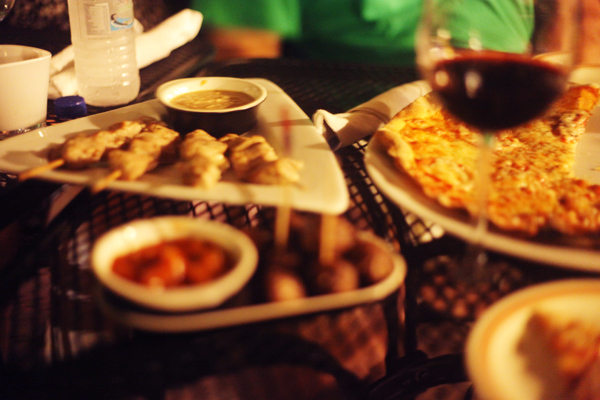
Went for some tapas and pizza tonight and got pleasantly surprised by an unexpected jazz performance. And it was not your everyday wannabe jazz artist either but a young Grenadian woman called Jenny J with an effortlessly sensual and deep voice. Even Alex - who's worked with many jazz musicians along the years as a mastering engineer and normally is extremely picky when it comes to live performers - said she had one of the stronger voices he've heard as of late. No good recordings available online as she has no producer yet, so this is one of the only old things I found, though none of the Youtube versions really does her voice any justice. Some of what she performed tonight was a magnificent version of Valerie.

Exploring Grenada

So we had the choice of hiking into the rainforest to see the real high rainfalls, a walk that would take four hours at the minimum, or the second option which was to drive around the complete island and stop at every interesting place and like that see more of Grenada. Due to our tight schedule we opted for going around the whole of the island by car and wait with serious hiking till we get to Colombia. Very thankful to our friend Roger who's born in Grenada, and who showed us around in best possible way.
mona monkey grenada, woman, sailing caribbean, grenada
A monkey friend. Outside of Africa, Grenada is the only place in the world where you can find the mona monkey. It was brought here with slave ships from West Africa during the 18th century.
 One of the many water falls.
At the highest hill.
Normally when it's sunny weather, the hill tops are covered with thick clouds. Because it was a rainy day, we could see far over the end of the island and out onto the sea.
By the volcano crater where a lake can be found. Can you imagine that this is the opening to the volcano, and where the hot lava poured out from a few thousand years ago. It all seemed so calm and quiet now.
Loving these walking boots.
Fruits and veggies being sold by the road. Sweet potatoes, cassava, plantain, cristophene...
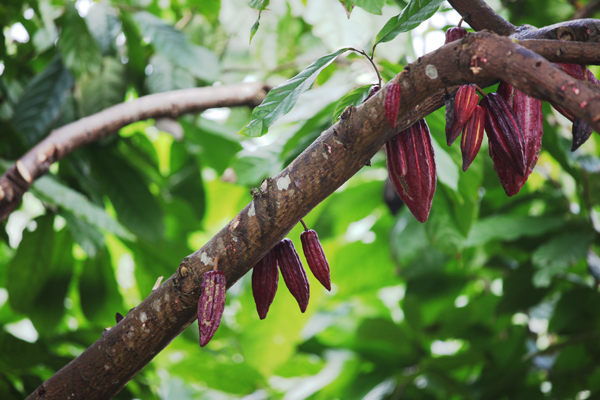
That's how your favorite chocolate looks like before it is made into chocolate.
A typical Caribbean house.
More cocoa.
cocoa tree grenada
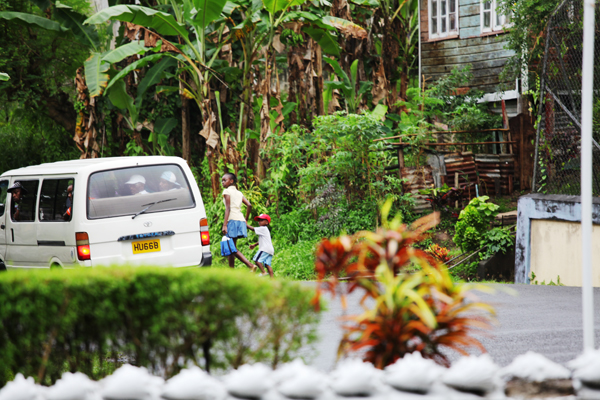
A typical Caribbean road.
The breadfruit trees were brought from the Pacific to the Caribbean during the colonial times. The fruit was used to feed the slaves in a cost effective way. When you've peeled the fruits, the white colored inside can be boiled in water and taste reminds of potatoes though a bit more jellylike.
And another typical Caribbean house.
lemon, orange tree caribbean, grenada
A hybrid between orange and mandarine.
banana tree grenada, caribbean,
They have so many different variations of bananas around here. Some of which never reaches Europe or the States as they ripe too fast. 
Huge Dasheen leaves/Taro plant/Elephant ears. The dasheen leaves are in the Caribbean used to make the traditional dish called callaloo which is pretty similar to creamed spinach. And the roots/corms, which are known as Taro, can be cooked in a variety of ways, roasted, baked, fried or boiled, and they have a nutty flavor.
A banana tree forest.
Grenada is a bit more civilized in many ways compared to the other islands in the Caribbean. For example, all the goats and livestock are leashed and so they can't run around blocking the traffic on the roads which is what they normally do in the West Indies.
A wasp's nest.
The white bird is picking insects from the cows fur.
Rainy roads. It's almost as if it was the rainy season right now as it's been raining great amounts every day for almost a month. What is good though is that everything is so very green and lush and the mangoes are ripe even though it normally isn't their season at the moment.
How beautiful? One of the best photos I've taken during these past two years in the Caribbean. Not because of my photographing but because of the swagger and attitude of this man. It's an image very cliché to the Caribbean culture yet his style was so perfectly well put together.
Bamboo trees.
 Selling grilled corn by the road.
Mmmm, too bad he didn't put butter on top of the maize, would have made them perfect.
Baby goats.
 Cutting fish.
 Three barracudas.
Everywhere an abundance of colors especially after all this rain.
Goat in a tree.
Unfortunately they don't make much use of the goats milk here in the Caribbean. There's tens of thousands of goats on the islands, but Grenada is the first place where I've come across one person that actually produces goat cheese. Goat meat is widely used for cooking, but there doesn't seem to be a demand of the nutritious milk. If I would have lived here, I'd have a couple goats in my garden and eat fresh chèvre each and every day.
A young mother and her son on their way to jump into the bus. All these small buses are privately run. They charge approximately 2,5 ECD per person ($1 USD) per ride. The drivers are young men of normally around 25-35. They play loud hip hop or dub music and drive extremely fast as they pull in clients from the road as if their life depended on it. It seems a job with high competition and rough banter, so no older men can keep up with the game. It's also interesting that the bus drivers are considered the tough guys on the island, guys with arms covered in tattoos and dressed in cool clothes, and they often pick up young pretty school girls who get to sit next beside them front row, riding with them back and forth all day with the occasional "break" on the way. Caribbean culture in a nut shell. How funny it would have been if the bus drivers were all considered as the hot and attractive guys in a European society for example.
Arriving to River Antoine, the oldest functioning water propelled rum distillery.

Roger, Alex and Michael checks out the old water wheel which powers the cane press and extracts the juice from the sugarcane. Bundles of cane are crushed twice...

.. and then placed in the island's only railway truck which is trundled along the island's only railway line for the short trip to a tip. Here the cane dries in the sun and, now known as 'bagasse', is used as fertilizer for the cane fields as well as being used as fuel for the fire below the boiling cane juice. Nothing is wasted.

This is where the sugar cane juice is being sent after the press. These are the original fermenting vats from 1785. Underneath is the fire that keeps the fermentation process going.

Nowadays they use these more modern vats for fermenting the sugar cane juice.

Huge stacks of remnants of the sugar cane.
A small rainfall by the distillery.
That's by the way how the sugar cane looks in the wild.
After that we went to one of the beaches up in the North, very windy and rough seas but extremely beautiful.
Two currents meet at the point.
A tradition on many islands around here, is that family and friends gather on the beach on Sundays. They bring music, barbecue, food and drinks and especially in Grenada, where the locals are very friendly and hospitable, they invite strangers who pass by, to join them in the party. We didn't have time to stay too long, but I got to try this national dish called Oil Down. It's a stew made of bread fruit, dumplings, salted meat or chicken, coconut milk, some other vegetables, callaloo, as well as a mixture of spices. Was very tasty!
Back to one of the towns by the coast. I realize I only have images of men in this series today... seems as the women were inside hiding from the continuous rain. 
In search of that rum called River Antoine..
And in a rave neon colored rum shop with a very sympathetic owner we finally found it.
It is not considered the best of rums in the world, but flavor was OK. Reminded of the Rhum Agricole that can be found on Martinique - which also is made directly from the sugarcane juice rather than the molasses. This one had 69% alcohol and mixed well with juice and grated nutmeg. Did you know by the way that Grenada is called "The Spice Isle", because of it's large production of spices such as nutmeg and mace of which Grenada is one of the world's largest exporters.
Everywhere cricket games on TV.
Nightime in Gouyave. A large fishing town that never sleeps.
Another rum shop where guys are limin' and watching another cricket game.
Bumped into one of Roger's friends.
Finally found an ice-cream shop!
The yellow one to the left is called "Power", and was probably the weirdest tasting ice-cream I had in my entire life... why? It's a mixture of vanilla and Guinness Beer... The locals seem to love it though.
A couple teenage boys watching Home Alone by their little candy store on the street..

Overall Grenada is one of our most preferred islands in the Caribbean. I know I've said that several times about other islands in the past, but after having the chance of staying here for almost a month, I can easily say that this particular place in the West Indies has the perfect mixture between typical Caribbean charm, culture and nature, well mixed with modern facilities and the people are some of the nicest, friendliest and most beautiful in the whole West Indies in our opinion. I am currently writing a long Caribbean summary where I'll share our view of each of the places we've had the pleasure to visit during these past two years. Will share it with you as soon as I can.

We're obviously a bit sad that we didn't have more time for Grenada, especially since we've learned to know some really cool people, but that's the life of a sailing nomad. You get to know people and places that you become very fond of, but unfortunately there always comes a time to say goodbye. Hoping to be back one day.